

Revenue, 2025
$9.9Bn
Forecast, 2035
$567.1Bn
CAGR, 2025-2035
49.9%
Report Coverage
Global
Market Size and Forecast
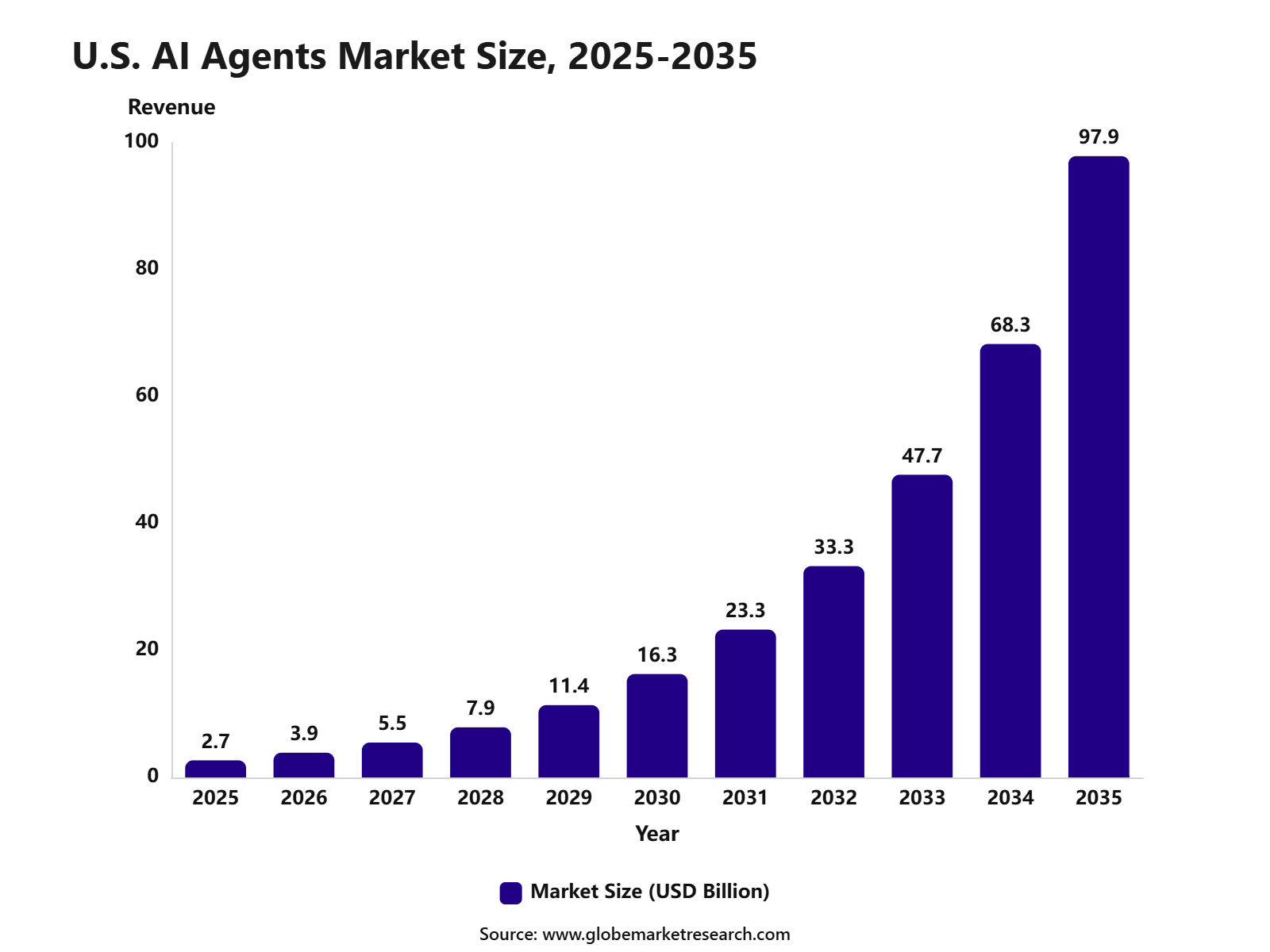
The Global AI Agents Market was valued at USD 9.9 billion in 2025 and is projected to reach USD 567.1 billion by 2035, growing at a CAGR of 49.9%. North America led the market with a 42.3% share in 2025, while the U.S. market reached USD 2.7 billion and is expected to grow at a 43.2% CAGR, supported by supported by strong enterprise automation demand, rapid adoption of autonomous AI workflows, rising investment in cloud-based AI infrastructure, and wider use of AI agents across customer service, software development, finance, healthcare, and business operations.
The AI Agents Market refers to the commercial ecosystem built around software systems that can understand goals, plan tasks, use tools, interact with data, and complete actions with limited human support. These agents are being used in customer service, software development, sales operations, finance workflows, research support, cybersecurity, IT automation, and business process management. Their value is rising because enterprises are moving from simple AI chat tools to systems that can complete multi-step work across applications, documents, APIs, and enterprise platforms.
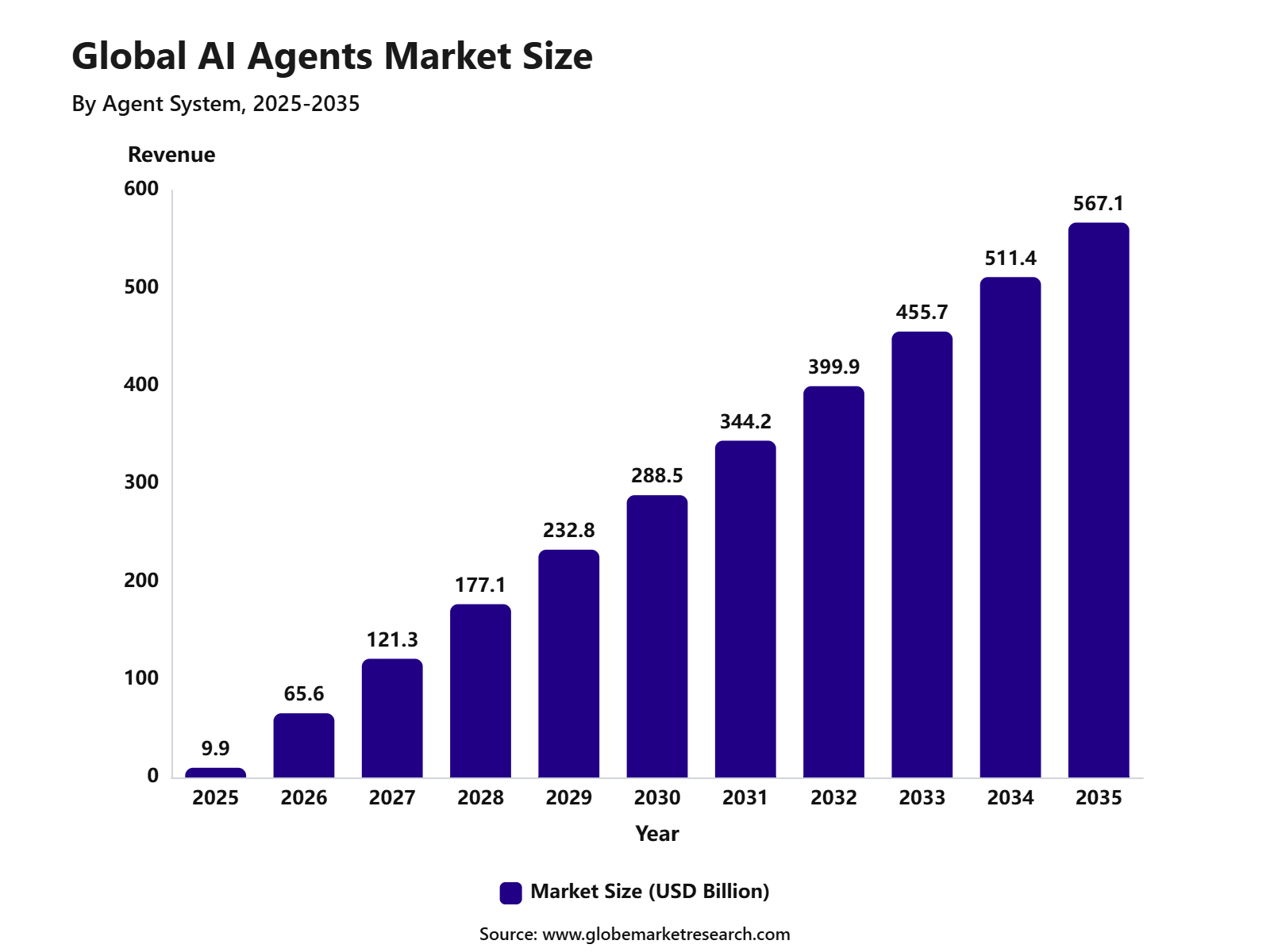 iThe graph shows projected market growth until 2035 based on CAGR analysis. Actual outcomes may vary depending on changing demand, competition, and economic factors.To gain greater insights - request a sample report PDF
Top Market Takeaways
By agent system, single agent systems led the AI Agent Market with a 65.3% share in 2025. Growth was supported by easier deployment, focused task handling, and lower integration complexity.
By product type, ready-to-deploy agents held the largest share of 69.7% in 2025. Adoption increased as enterprises preferred faster setup, ready use cases, and lower development effort.
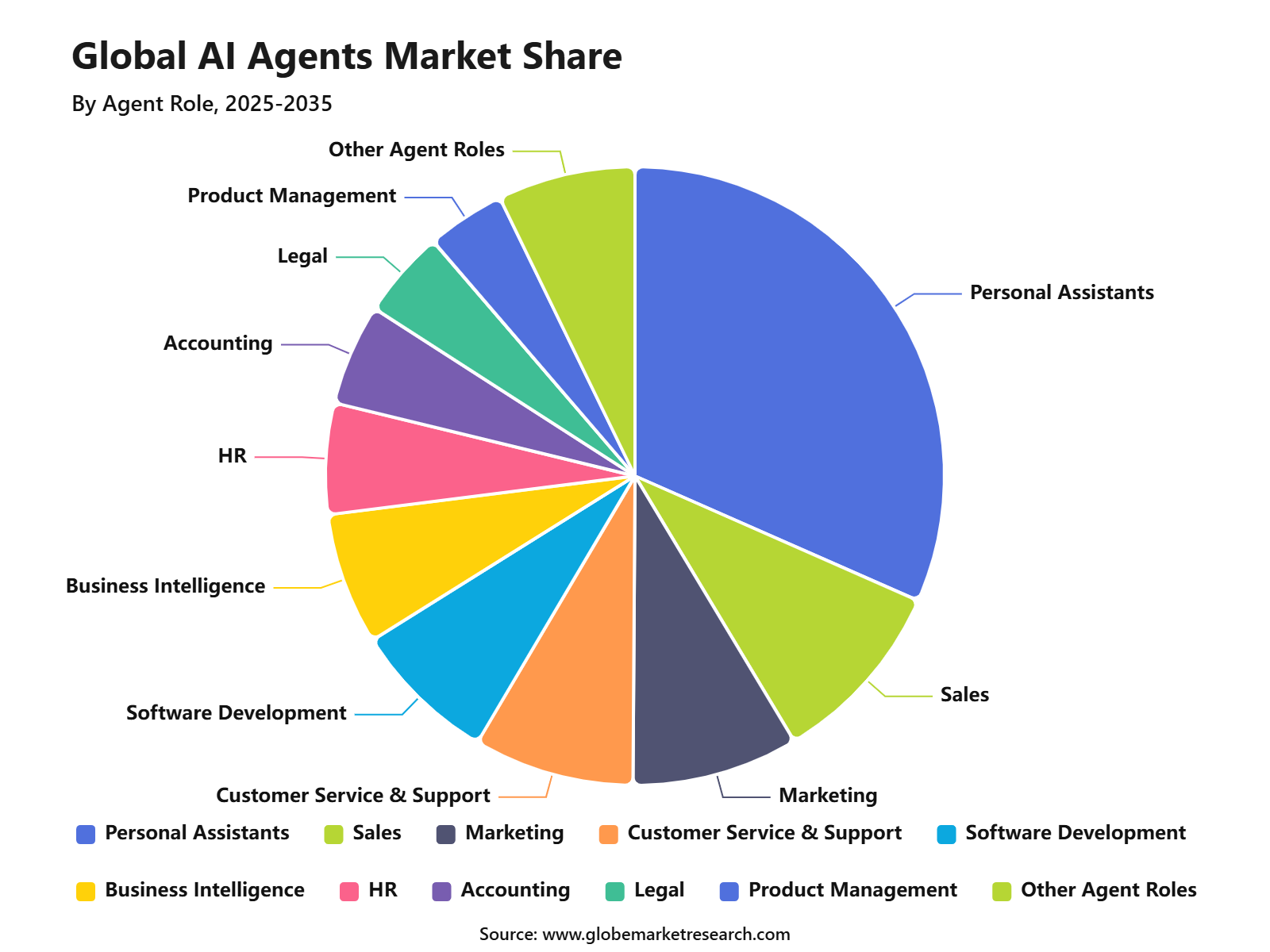
By agent role, productivity and personal assistants accounted for 31.6% share in 2025. Demand was driven by use in task management, email support, scheduling, document work, and workflow automation.
By end use, enterprises dominated the market with a 68.1% share in 2025. Growth was supported by rising use of AI agents to improve efficiency, reduce manual work, and support business decisions.
Regionally, North America led the AI Agent Market with a 42.3% share in 2025. The U.S. market reached USD 2.7 billion in 2025 and is projected to grow at a 43.2% CAGR, supported by strong AI investment, cloud adoption, and enterprise automation.
According to IBM, AI-enabled workflows are expected to grow sharply. Business leaders expect AI-enabled workflows to rise from 3% today to 25% by the end of 2025, showing strong movement toward agent-led automation.
Around 64% of AI budgets are now being spent on core business functions, which shows that companies are moving AI agents closer to daily business work.
Around 69% of executives said improved decision-making is the top benefit of agentic AI systems.
Around 83% of executives expect AI agents to improve process efficiency and output by 2026.
71% of executives believe agents will autonomously adjust to workflow changes.
Market Overview
The market is gaining strong attention as AI adoption becomes more common across businesses. Deloitte estimated that 25% of companies using generative AI would launch agentic AI pilots or proofs of concept in 2025, increasing to 50% by 2027. This indicates that the market is moving from early testing to wider enterprise pilots, especially in industries where process speed, compliance, and customer service quality are directly linked to business performance.
The growth of the AI Agents Market can be attributed to the rising need for workflow automation, lower operating costs, faster decision-making, and better digital customer engagement. Enterprises are under pressure to reduce repetitive manual work, improve response times, and manage larger volumes of data across departments. AI agents are being adopted because they can support tasks such as ticket handling, lead qualification, document review, coding assistance, procurement support, and internal knowledge search.
According to SellersCommerce, 70% of consumers use AI agents for flights, making it the leading category. Hotels and resorts follow with 65%, while consumer electronics account for 59%. Beauty products represent 56%, followed by clothes at 53% and over-the-counter remedies at 51%. Regular groceries and snacks show lower adoption, with both categories recording 45% of consumers using AI agents.
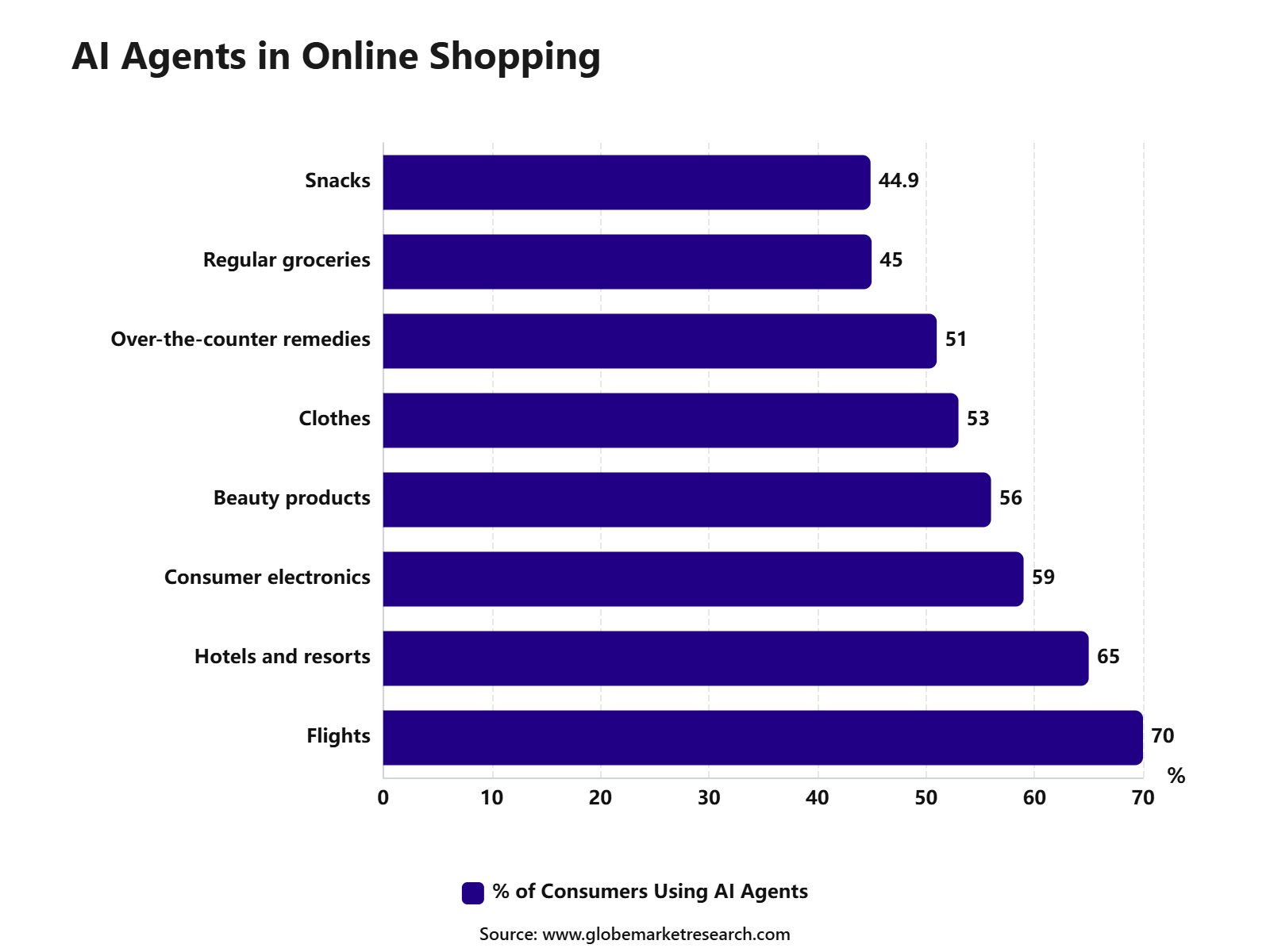 iThe graph shows projected market growth until 2035 based on CAGR analysis. Actual outcomes may vary depending on changing demand, competition, and economic factors.To gain greater insights - request a sample report PDF
Business Impact and ROI
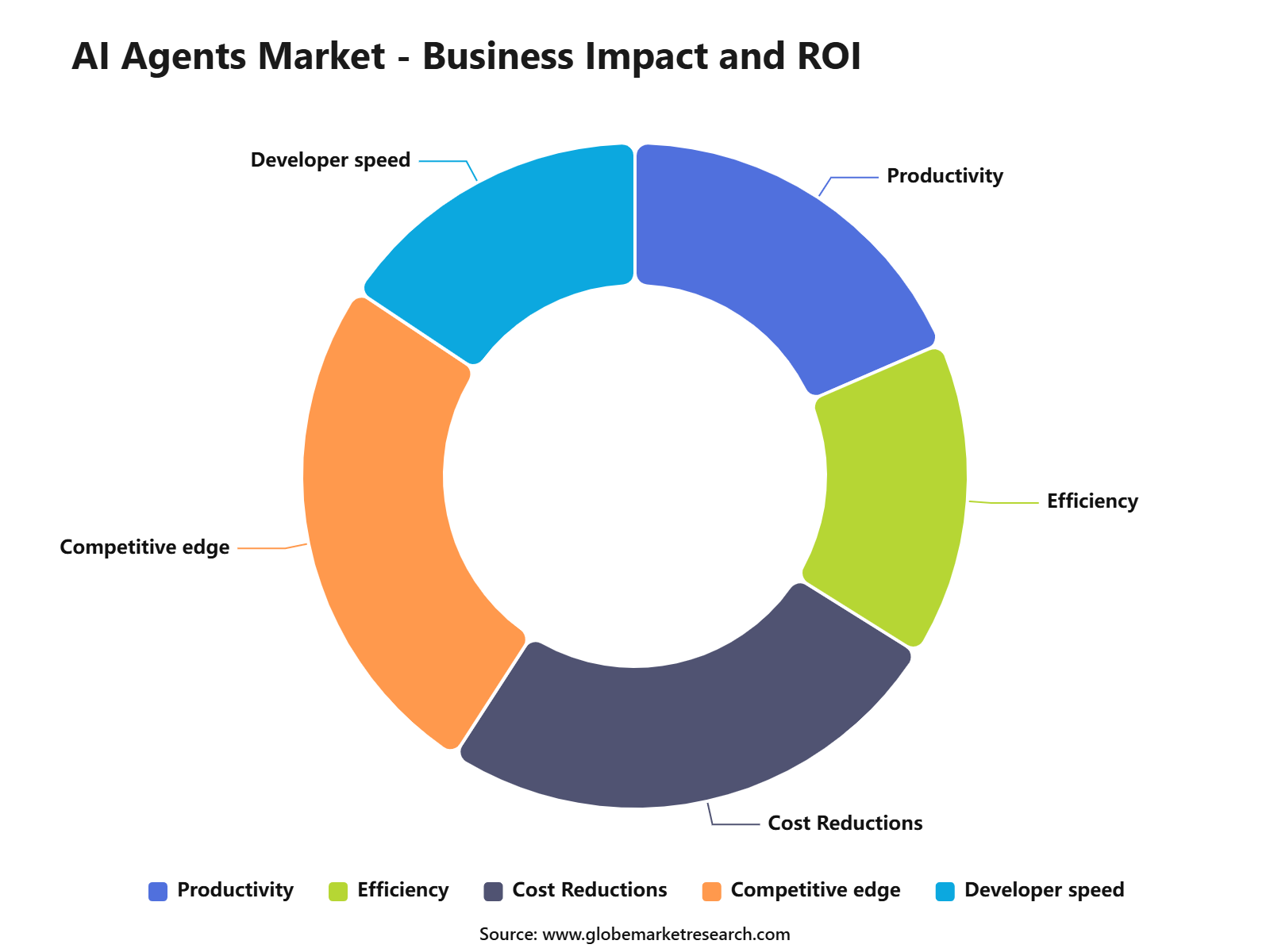
Productivity: According to PwC Survey, Around 66% of organizations report a measurable increase in workforce productivity after using AI agents. This shows that AI agents are becoming useful for reducing manual work and helping teams complete routine tasks faster.
Operational Efficiency: Companies using AI agents report 55% higher operational efficiency. This improvement is mainly linked to faster workflows, better task automation, and reduced delays in daily business operations.
Cost Reductions: Routine task operational expenses can drop by up to 90% when virtual agents are used. This makes AI agents valuable for businesses looking to lower repetitive process costs while improving service speed.
Competitive Edge: About 90% of business leaders view AI agents as an important competitive advantage. This indicates that companies are not only using AI agents for automation, but also for improving customer experience, decision-making, and business agility.
Developer Speed: By IBM, Software engineers using agentic coding tools complete tasks 55.8% faster. This highlights the growing role of AI agents in software development, especially for code generation, debugging, testing, and documentation support.
 iThe graph shows projected market growth until 2035 based on CAGR analysis. Actual outcomes may vary depending on changing demand, competition, and economic factors.To gain greater insights - request a sample report PDF
Regional Insights
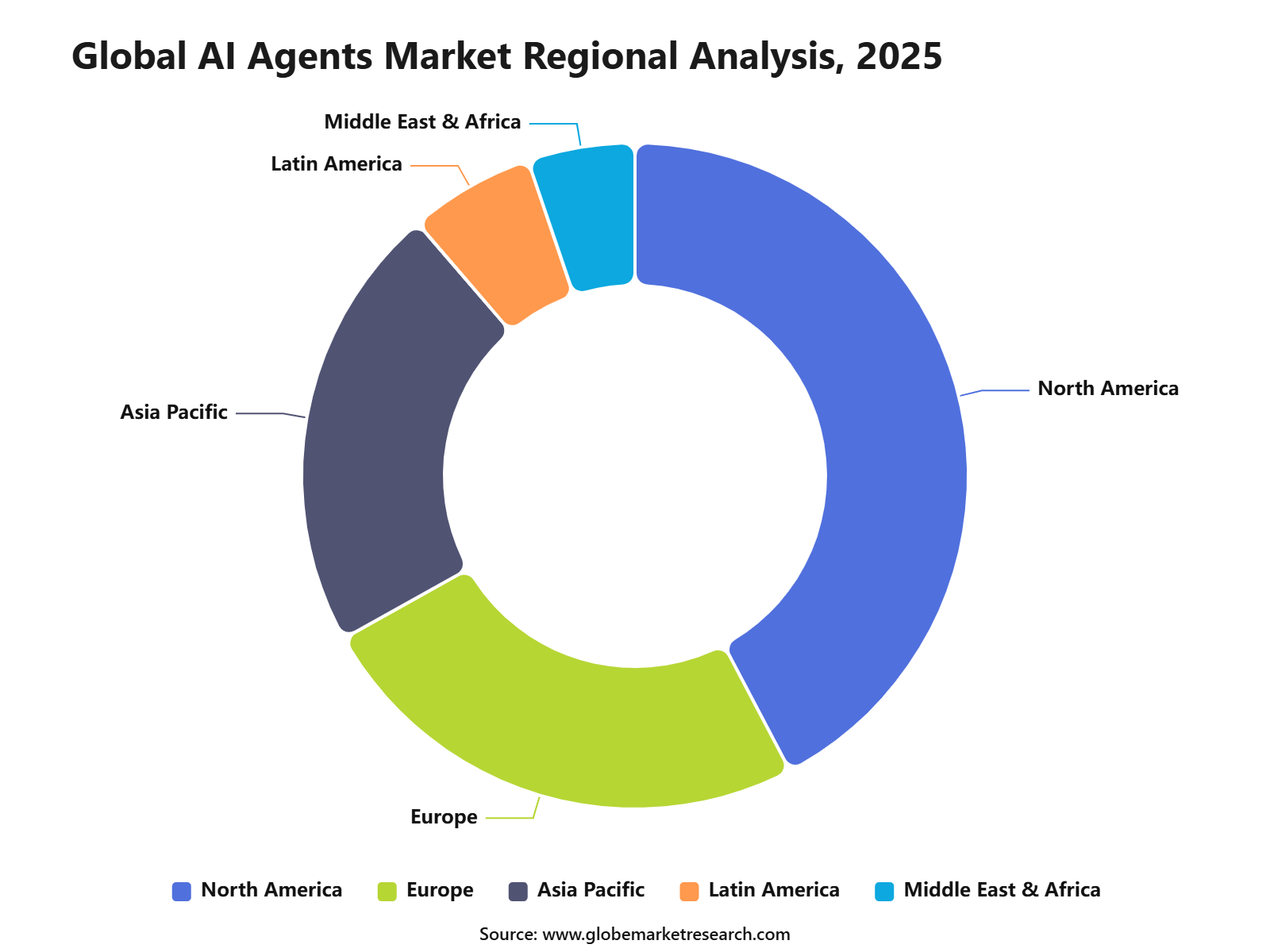
North America led the AI Agents Market with 42.3% share in 2025, supported by strong enterprise software adoption, advanced cloud infrastructure, high AI investment, and faster use of automation tools across large organizations. The region has a mature digital ecosystem, where companies are actively using AI agents for customer support, sales operations, IT service management, employee productivity, and workflow automation.
The growth of the region can also be attributed to the early adoption of cloud-based AI platforms and strong demand from sectors such as BFSI, healthcare, retail, technology, and professional services. Enterprises in North America are moving from basic AI chatbots to action-based AI agents that can support decision-making, complete routine tasks, and improve operational efficiency.
 iThe graph shows projected market growth until 2035 based on CAGR analysis. Actual outcomes may vary depending on changing demand, competition, and economic factors.To gain greater insights - request a sample report PDF
The U.S. AI Agents Market was valued at USD 2.7 billion in 2025 and is projected to grow at a 43.2% CAGR, supported by strong enterprise AI spending, advanced cloud infrastructure, and wider use of AI tools across business functions. The country remains a key growth center due to high adoption among technology companies, financial institutions, healthcare providers, retailers, and professional service firms.
U.S. enterprises are increasingly adopting AI agents for productivity improvement, customer engagement, coding support, business intelligence, sales assistance, and internal process automation. Demand is also being supported by strong investment in generative AI, large language models, agent platforms, and secure enterprise AI systems, which are helping companies shift from pilot projects to wider commercial deployment.
Stanford’s 2025 AI Index reported that U.S. private AI investment reached USD 109.1 billion in 2024, while global private investment in generative AI reached USD 33.9 billion, an 18.7% increase from 2023. This funding environment is likely to support new agent platforms, enterprise AI infrastructure, model governance tools, and vertical-specific AI agent applications.
 iThe graph shows projected market growth until 2035 based on CAGR analysis. Actual outcomes may vary depending on changing demand, competition, and economic factors.To gain greater insights - request a sample report PDF
Agent System Insights
Single agent systems dominated the AI Agents Market with 65.3% share in 2025, supported by their simpler design, lower integration burden, and faster deployment across routine business workflows. These systems are widely used for task automation, customer support, content handling, scheduling, research assistance, and internal productivity because they can operate around one defined goal or process.
The dominance of single agent systems can also be linked to the early maturity stage of enterprise agent adoption. A 2026 industry study on agentic AI adoption found that many companies are still using AI assistants or limited agent functions, while full multi-agent orchestration remains less common in production settings. This supports the strong position of single agent systems, as enterprises usually prefer controlled use cases before expanding to more complex agent networks.
By Product Type Insights
Ready-to-deploy agents held 69.7% share in 2025, driven by the need for fast implementation, lower development cost, and easier integration with existing software. These agents are preferred by companies that want practical automation without building a custom AI agent system from the ground up.
Adoption is being supported by pre-built agents for sales, customer service, HR, finance, IT support, and office productivity. AWS has highlighted that 62% of organizations prefer to buy pre-built agent solutions, while 50% already have 10 or more agents in production. This shows why ready-to-deploy agents are gaining stronger demand among enterprises that want speed, reliability, and lower technical risk.
By Agent Role Insights
Productivity and personal assistants accounted for 31.6% share in 2025, making this the leading agent role. These agents are being used to manage emails, summarise documents, prepare reports, schedule meetings, support research, generate content, and help employees complete daily tasks with less manual effort.
The segment is also benefiting from the wider use of AI tools in office environments. Employees are increasingly using AI assistants to reduce repetitive work and improve task completion speed. As a result, productivity and personal assistant agents are becoming an important entry point for enterprise AI adoption.
 iThe graph shows projected market growth until 2035 based on CAGR analysis. Actual outcomes may vary depending on changing demand, competition, and economic factors.To gain greater insights - request a sample report PDF
By End Use Insights
Enterprises dominated the AI Agents Market with a 68.1% share in 2025, supported by rising adoption across customer service, sales operations, IT service management, finance, compliance, supply chain, and internal knowledge management. Large organizations are using AI agents to reduce repetitive work, improve process speed, and support employees across multiple business functions.
Enterprise demand is also being shaped by the shift from basic chatbots to agents that can take action across business systems. IBM reported that business leaders expected an 8x surge in AI-enabled workflows by 2025, with AI agents being used to improve process efficiency and reduce operating costs. This confirms that enterprise users are becoming the strongest buyers of AI agent solutions.
Key Market Segments
By Agent System
Single Agent Systems
Multi Agent Systems
By Product Type
Ready-To-Deploy Agents
Build-Your-Own Agents
By Agent Role
Productivity & Personal Assistants
Sales
Marketing
Legal
Customer Service & Support
Coding & Software Development
Product Management
Accounting
Human Resources
Business Intelligence
Agent Roles
By End Use
Consumers
Enterprises
BFSI
Telecommunications
Government & Public Sector
Healthcare & Life Sciences
Manufacturing
Media & Entertainment
Retail & E-Commerce
Professional Service Providers
Law Firms
Other Enterprises
By Regional
North America
Europe
Asia Pacific
Latin America
Middle East and Africa
Drivers Impact Analysis
Impact Factor | Estimated CAGR Impact | Regional Relevance | Market Impact |
|---|---|---|---|
Rising enterprise automation demand | +12.8% | North America, Europe, Asia Pacific | Expands adoption of AI agents in business workflows. |
Growth in multi-agent systems | +11.7% | U.S., China, Japan, South Korea, Europe | Supports complex task orchestration. |
Increasing use of AI in personal productivity | +10.9% | North America, Europe, Asia Pacific | Improves individual and team efficiency. |
Expansion of cloud-based AI platforms | +10.2% | Global | Enables scalable deployment of agents. |
Integration of AI agents in software applications | +9.8% | U.S., Europe, Asia Pacific | Enhances enterprise productivity solutions. |
Restraints Impact Analysis
Impact Factor | Estimated CAGR Impact | Regional Relevance | Market Impact |
|---|---|---|---|
Security and privacy concerns | -6.2% | North America, Europe, Asia Pacific | Limits adoption in sensitive workflows. |
High cost of AI agent development | -5.7% | Global | Slows deployment by SMEs. |
Lack of AI governance standards | -5.1% | U.S., Europe, Japan | Raises regulatory risk. |
Integration complexity with legacy systems | -4.8% | Global | Delays enterprise adoption. |
Shortage of skilled AI personnel | -4.3% | Global | Limits solution scalability. |
Opportunities Impact Analysis
Impact Factor | Estimated CAGR Impact | Regional Relevance | Market Impact |
|---|---|---|---|
Expansion of autonomous process automation | +12.1% | North America, Europe, Asia Pacific | Drives enterprise efficiency and ROI. |
Growth in customer service AI agents | +11.0% | U.S., Europe, China | Reduces human intervention in support. |
Rising adoption in BFSI and healthcare | +10.5% | North America, Europe, India | Supports vertical-specific AI solutions. |
Integration with large language models | +10.0% | Global | Enhances agent intelligence and capabilities. |
Development of ready-to-deploy agent solutions | +9.7% | U.S., Europe, Asia Pacific | Accelerates adoption in enterprises. |
Challenges Impact Analysis
Impact Factor | Estimated CAGR Impact | Regional Relevance | Market Impact |
|---|---|---|---|
AI agent project failures | -5.5% | Global | Reduces confidence in deployment. |
Lack of identity and access controls | -4.9% | North America, Europe, Asia Pacific | Creates security and compliance risks. |
Task execution errors by agents | -4.6% | Global | Limits reliability in enterprise operations. |
Vendor dependency and lock-in | -4.2% | Global | Reduces platform flexibility. |
Integration with enterprise apps | -4.0% | Global | Slows adoption in legacy systems. |
Recent Developments
June 2026 – Meta Platforms launched an AI‑powered Business Agent designed to automate enterprise workflows such as booking, sales assistance, and customer inquiry management. This offering expands Meta’s AI product ecosystem and targets large‑scale customizable enterprise use across WhatsApp, Messenger, and Instagram. The company also created a new Enterprise Solutions team to focus on agentic AI tool deployment and integration with business systems.
January 2026 – ServiceNow expanded its partnership with Anthropic by integrating Anthropic’s Claude AI models into ServiceNow’s Build Agent platform. This deep integration enables natural‑language creation of applications and automated workflows, strengthening ServiceNow’s position in enterprise automation and AI‑powered task execution.
July 2025 – H Company, a French AI startup, developed and open‑sourced Surfer‑H‑CLI, a browser‑based AI agent automation tool capable of performing web tasks autonomously using a 3B‑parameter model. This release reflects broader innovation in agentic automation tools for enterprise and developer use cases.
December 2025 – ServiceNow announced its largest acquisition to date by agreeing to buy cybersecurity specialist Armis for USD 7.75 billion. This deal supports ServiceNow’s strategy to enhance AI governance, security, and autonomous agent capabilities within enterprise environments, addressing risks associated with increasingly connected and agent‑driven systems.
November 2025 – Microsoft advanced its AI agent ecosystem by unveiling Project Solara, an Android‑based agent‑first platform aimed at supplanting traditional apps with autonomous AI task execution interfaces. At Build 2026, the company also introduced the Scout personal AI agent built on its in‑house reasoning model, underlining strategic investment in agentic AI across devices and personal productivity.
AI Agents Market Report Scope
Report Highlights | Details |
|---|---|
Market Revenue (2025) | USD 9.9 Bn |
Forecast Revenue (2035) | USD 567.1 Bn |
CAGR (2025-2035) | 49.9% |
Base Year for Estimation | 2025 |
Historic Data | 2020-2024 |
Forecast Period | 2025-2035 |
Report Coverage | AI market impact analysis, Market surveys, trade analysis, Industry & competitive intelligence, Revenue projections, company positioning, competitive analysis, growth drivers, and emerging market trends, Strategic Consultation & Advisory Services |
Segments Covered | By Agent System (Single Agent Systems, Multi Agent Systems), By Product Type (Ready-To-Deploy Agents, Build-Your-Own Agents), By Agent Role (Productivity & Personal Assistants, Sales, Marketing, Legal, Customer Service & Support, Coding & Software Development, Product Management, Accounting, Human Resources, Business Intelligence, Agent Roles), By End Use (Consumers, Industrial, Enterprises) |
Regional Analysis | North America – US, Canada; Europe – Germany, France, The UK, Spain, Italy, Russia, Netherlands, Rest of Europe; Asia Pacific – China, Japan, South Korea, India, New Zealand, Singapore, Thailand, Vietnam, Rest of Latin America; Latin America – Brazil, Mexico, Rest of Latin America; Middle East & Africa – South Africa, Saudi Arabia, UAE, Rest of MEA |
Key companies profiled | Alibaba Group Holding Limited, Amazon Web Services, Inc., Apple Inc., Baidu, Google, IBM Corporation, Meta, Microsoft, NVIDIA Corporation, Salesforce, Inc. and Others |
Customization Scope | Tailored insights for specific regions, countries, and market segments can be provided. Additional report customization is available upon request. |
Competitive Landscape
The market is characterized by intense competition among established players and emerging companies. Strategic partnerships, mergers and acquisitions, and product innovation are key strategies employed by market participants.
Key Market Players
Amazon Web Services, Inc.
Apple Inc.
Alibaba Group Holding Limited
Baidu
IBM Corporation
Microsoft
Meta
NVIDIA Corporation
Salesforce, inc.
Other Key Players
Research Methodology
This market study is prepared using a combination of primary and secondary research. Primary research includes discussions with manufacturers, suppliers, distributors, consultants, industry experts, and end users. Secondary research covers company reports, government databases, trade associations, technical publications, regulatory sources, and trusted industry documents. The collected information is used to assess market demand, pricing trends, technology adoption, competitive activity, and regional performance.
AI language models are not used as primary data sources, and publicly available AI-generated content is not treated as market evidence. Computational tools may be used to support data processing, translation, data classification, and pattern identification. However, every published assessment is supported by verified sources, human review, and primary market discussions.
Market estimates are developed through top-down and bottom-up approaches and validated using data triangulation. Revenue, production, shipment, pricing, and application-level data are compared across multiple sources. Forecasts consider economic conditions, regulatory changes, investment activity, innovation, supply chain developments, and industry risks. All findings are reviewed through source verification and internal quality checks before publication.
Part I
Source Management & Input Data Standards
Who provides data, how sources are qualified, and what types of evidence are admissible.
Part II
Research Scope & Market Coverage
How we define the markets we assess and the parameters that govern each product.
Part III
Data Collection, Verification & Submission
The mechanics of gathering, cross-checking, and hierarchically ranking evidence.
Part IV
Assessment Determination & Quality Controls
How raw data becomes a published assessment — normalisation, expert judgement, and outlier exclusion.
Part V
Publication, Corrections & Revision
Our publication schedule, corrections policy, and methodology review cycle.
Part VI
Independence, Ethics & Complaints
Conflict-of-interest policies, editorial independence, and how clients raise concerns.
Google · Preferred Sources
Don't miss the latest market research insights and industry updates on Google.
Add Globe Market Research as a preferred source in the Google app to see our reports, analysis, and market stories in your news suggestions.
Meet the Team
This report was prepared by our expert analysts with deep industry knowledge and research experience.
Manoj H. is a Senior Research Analyst with more than 4 years of experience in market research, industry analysis, competitive intelligence, and strategic assessment. He has contributed to syndicated reports, customized research studies, market sizing, forecasting, company profiling, and competitive landscape analysis. His industry expertise covers Healthcare and Pharmaceuticals, Manufacturing and Construction, and Agriculture. He evaluates regulatory developments, production trends, technology adoption, supply chain structures, customer demand, investment activity, and competitive strategies across these industries.
Pratiksha K. is a Senior Research Analyst with more than five years of experience in market research, industry analysis, competitive intelligence, and business strategy. She has contributed to detailed market reports, customized research studies, company profiling, market sizing, trend analysis, and strategic consulting projects for clients across different regions. Her industry expertise covers Chemical and Material, Consumer Goods, Food & Beverages and Energy & Power. She closely evaluates changing customer requirements, technology developments, regulatory conditions, supply chain structures, investment activity, and competitive strategies to provide clear and practical market insights.
Frequently Asked Questions
Related Reports
More in Information and Technology
Shooting Games Market Size to hit USD 238.9 bn by 2035 | CAGR of 10.7%
Shooting Games Market Insights Analysis by Product (Shooting Gallery, Light Gun Shooter, First-Person Shooter, Third-Person Shooter, and Others), by Device Type (PC/MMO, Tablet, Mobile Phone, and TV/Console), by End User (Male and Female), Regional Insights, Technology Trends, Competitive Landscape, Strategic Opportunities, and Growth Forecast, 2026-2035
AI Data Centre Cooling Market Size to Reach USD 52.2 billion by 2035
AI Data Centre Cooling Market Size, Share, Trends and Growth Analysis Report By Cooling Type (Air Cooling, Liquid Cooling, Hybrid Cooling Systems), By Data Centre Type (Hyperscale Data Centres, Colocation Data Centres, Enterprise Data Centres, Edge Data Centres), By Cooling Component (Cooling Units, Chillers, Air Handling Units, Pumps, Heat Exchangers), By End User (Cloud Service Providers, Colocation Providers, Enterprises, Government and Defense), By Regional Insights, Technology Trends, Competitive Landscape, Strategic Opportunities and Growth Forecast, 2026-2035
Agentic AI Security Market Size to hit USD 52.3 billion by 2035 | CAGR of 44.5%
Agentic AI Security Market Size, Share, Trends and Growth Analysis Report By Security Function (Identity and Access Security, AI Governance and Risk Platforms, Threat Detection and Response, Data Security and Privacy, Vulnerability Assessment and Remediation, Security Orchestration, Automation and Response, Security Posture Management, Deception Technology), By Offering (Solutions, Tools and Point Solutions, Managed Security Services, Professional and Integration Services, Training and Certification Services), By Level of Autonomy (Semi-Autonomous Systems, Fully Autonomous Security Agents), By Deployment Layer (Model Layer, Agent and Orchestration Layer, Application Layer, Data Layer, Infrastructure Layer, Integration Layer), By Deployment Mode (Cloud-Based, On-Premises, Hybrid), By Organization Size (Large Enterprises, Small and Medium Enterprises), By Application (Enterprise IT Security, Financial Services Compliance, Healthcare Data Protection, Government and Defense, Cloud Security), By Vertical (BFSI, Healthcare and Life Sciences, Government, Defense, IT and ITES, Telecommunications, Retail and E-commerce, Energy and Utilities, Manufacturing, Other Verticals), By Regional Insights, Technology Trends, Competitive Landscape, Strategic Opportunities and Growth Forecast, 2026-2035
South Korea Physical AI Market Size to Reach USD 3.6 billion by 2035
South Korea Physical AI Market Size, Share, Trends and Growth Analysis Report By Deployment (On-Device AI, Cloud-Based AI), By Component (Hardware, Software, Services), By Technology (Computer Vision, Speech and Natural Language Processing, Gesture and Movement Recognition, Reinforcement Learning and Control Systems, Other Technologies), By Robot Type (Service Robots, Humanoid and Social Robots, Collaborative Robots, Exoskeletons and Prosthetics, Mobile Robots and Drones, Industrial Robots), By Application (Healthcare, Manufacturing and Automotive, Logistics and Warehousing, Retail and Hospitality, Other Applications), By Technology Trends, Competitive Landscape, Strategic Opportunities and Growth Forecast, 2026-2035