

Revenue, 2025
$39.6Bn
Forecast, 2035
$231.3Bn
CAGR, 2025-2035
19.3%
Report Coverage
Global
Market Size and Forecast
The Global Biohacking Market reached USD 39.6 bn in 2025 and is expected to grow to USD 231.3 bn by 2035, registering a CAGR of 19.3% from 2025 to 2035. North America held the largest regional share of 43.5% in 2025, supported by strong consumer interest in preventive health, growing use of wearable devices, rising investment in longevity science, and wider adoption of personalized wellness solutions. The U.S. Biohacking Market was valued at USD 13.2 bn in 2025 and is projected to expand at a CAGR of 17.3%, driven by the increasing use of health tracking technologies, nutrigenomics, smart supplements, sleep optimization tools, and direct-to-consumer wellness platforms.
The growth of biohacking can be attributed to rising interest in preventive health and long-term wellness management. Chronic diseases are a major reason for this shift, as the CDC reported in May 2026 that chronic diseases are the leading cause of illness, disability, and death in the United States. The CDC also stated that these conditions are linked to USD 5.3 trillion in annual health care costs. This is increasing the need for tools that help people monitor health patterns before serious problems develop.
Metabolic health is also becoming a strong driver for biohacking adoption. The CDC National Diabetes Statistics Report, updated in January 2026, estimated that 40.1 million people in the United States had diagnosed or undiagnosed diabetes in 2023, equal to 12.0% of the population. It also estimated that 115.2 million U.S. adults had prediabetes, creating strong demand for glucose monitoring, nutrition tracking, weight management, and activity-based interventions.
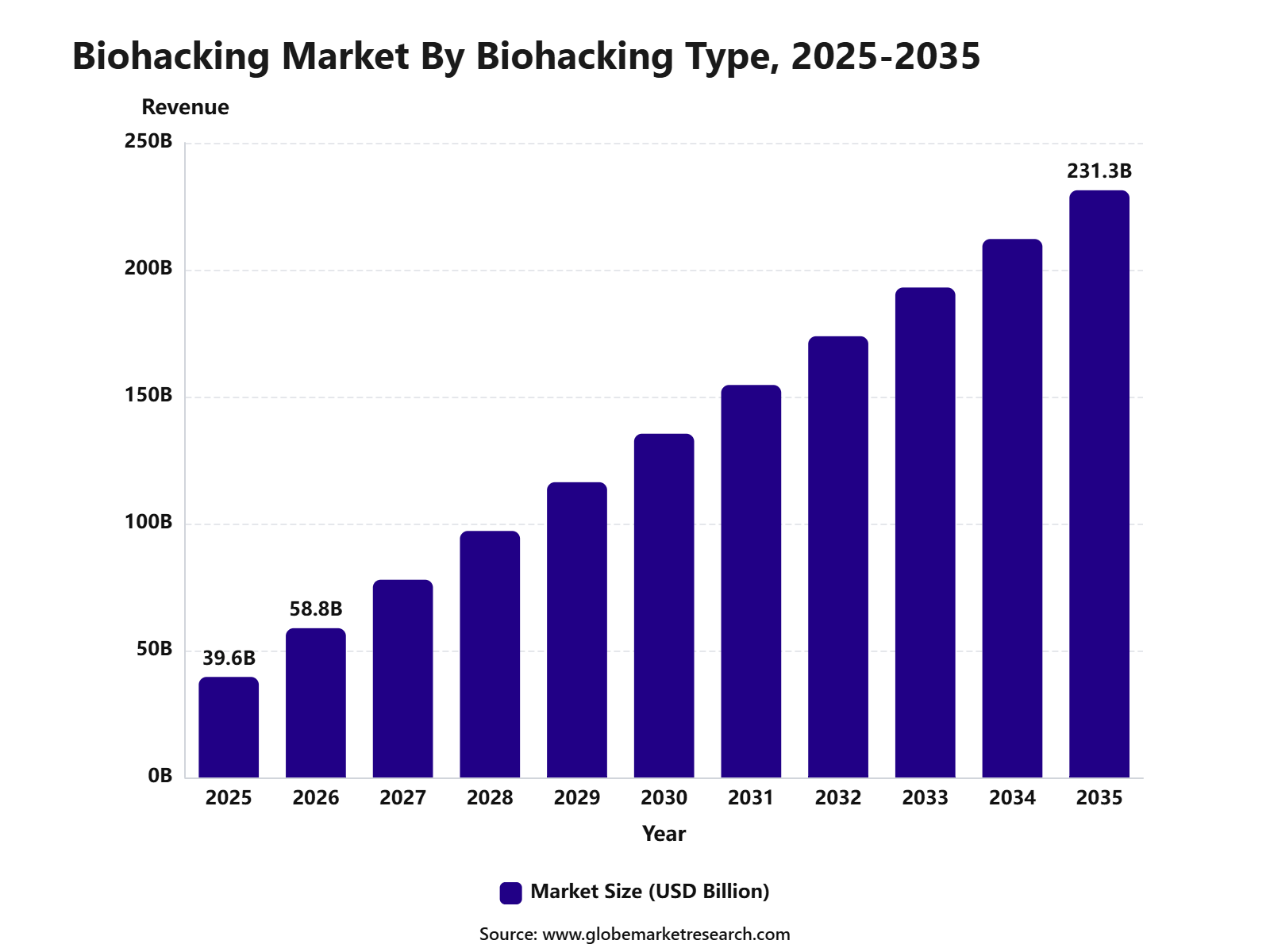 iThe graph shows projected market growth until 2035 based on CAGR analysis. Actual outcomes may vary depending on changing demand, competition, and economic factors.To gain greater insights - request a sample report PDF
Key Insights
Wearable devices led the market with 38.9% share, supported by growing use of fitness trackers, smartwatches, biosensors, and real-time health monitoring tools.
Nutrigenomics accounted for 32.8% share, driven by rising interest in personalized nutrition, DNA-based diet planning, and preventive health management.
Consumers held 60.5% share, supported by growing demand for self-health tracking, wellness optimization, and at-home health technologies.
North America claimed 43.5% share, supported by high wellness spending, early adoption of health technologies, and strong consumer awareness.
The U.S. biohacking market was valued at USD 13.2 billion in 2025 and is projected to grow at a CAGR of 17.3%.
38.7% of U.S. adults used two or more dietary supplements, 23.9% used three or more, and 15.4% used four or more supplements. This indicates rising use of supplement stacking among adults seeking immunity, energy, sleep, bone health, and overall wellness support.
Supplement use increases strongly with age. Among U.S. adults aged 60 and above, 75.9% used at least one dietary supplement, 56.4% used two or more, 39.9% used three or more, and 26.5% used four or more.
WHO reported that 31% of adults and 80% of adolescents do not meet recommended physical activity levels. Nearly 1.8 billion adults were physically inactive, and inactivity may rise to 35% by 2030 if current trends continue.
Biohacking Market Overview
In 2026, biohacking is increasingly being linked with precision health, where personal data is used to guide better decisions about diet, activity, recovery, and metabolic wellness. A 2026 Frontiers in Microbiology review described biohacking as the use of biotechnology, digital tools, and lifestyle interventions to optimize human performance and health. This shows that biohacking has moved beyond a niche wellness trend and is now connected with wearables, microbiome science, personalized nutrition, and digital health.
Demand for biohacking is being supported by consumers who want measurable feedback on sleep, fitness, glucose, stress, and aging-related indicators. Wearable devices are central to this demand, as a 2024 JMIR study found that 44.5% of surveyed U.S. respondents owned wearables during 2020 to 2022. The same study showed higher ownership among younger adults, urban users, people with higher income, and people with higher education levels. This indicates that demand is strongest among digitally active consumers who are comfortable using personal health data.
AI is also becoming important because it helps convert health data into more useful insights. In January 2025, the FDA stated that more than 1,000 AI-enabled medical devices had been authorized through established premarket pathways. The NIH Nutrition for Precision Health program is also using AI, microbiome research, genetics, proteins, metabolism, and other personal factors to develop algorithms that predict individual responses to food and dietary patterns. These developments show that biohacking technologies are moving toward more personalized, data-based wellness support.
By Product Type
Wearable devices led the Biohacking Market with a 38.9% share, supported by rising consumer demand for real-time health tracking. Smartwatches, fitness bands, smart rings, biosensors, sleep trackers, and continuous monitoring devices are increasingly used to measure heart rate, sleep quality, activity levels, stress, blood oxygen, and recovery patterns.
The growth of this segment can be attributed to the shift from reactive healthcare to daily health monitoring. Consumers are using wearable devices to understand their body signals, improve fitness routines, manage sleep, track metabolic health, and support preventive wellness decisions.
Wearable devices are also gaining wider acceptance because they combine convenience, mobility, and data-based feedback. As sensors become more accurate and software analytics improve, wearable devices are expected to remain a major entry point for consumers adopting biohacking practices.
By Biohacking Type
Nutrigenomics accounted for 32.8% of the Biohacking Market, driven by growing interest in personalized nutrition and gene-based wellness planning. This approach focuses on how genes, diet, and nutrients interact, helping users understand how individual biology may influence food response, metabolism, weight management, and long-term health outcomes.
The segment is expanding as consumers become more interested in targeted nutrition rather than general diet plans. DNA-based nutrition reports, microbiome-linked diet suggestions, metabolic testing, and personalized supplement plans are being used to support more specific health and performance goals.
Demand is also being supported by the wider availability of direct-to-consumer genetic testing and digital nutrition platforms. However, the segment requires careful use, as genetic information should be interpreted responsibly and supported by qualified health guidance where needed.
By End User
Consumers held the largest share of the Biohacking Market with 60.5%, supported by strong demand for self-tracking, preventive wellness, fitness improvement, sleep optimization, and personalized health solutions. Biohacking is no longer limited to athletes or advanced wellness users, as mainstream consumers are adopting easy-to-use tools for everyday health improvement.
The growth of consumer adoption can be linked to rising health awareness, increasing chronic disease burden, and the availability of affordable digital health products. Consumers are using wearables, apps, genetic testing kits, nutrition plans, supplements, nootropics, and recovery tools to monitor and improve personal wellness.
The consumer segment is expected to remain strong because biohacking products are becoming more accessible through e-commerce, mobile apps, wellness clinics, fitness centers, and subscription-based health platforms. Products that offer simple insights, clear benefits, strong privacy protection, and practical health guidance are likely to gain higher trust.
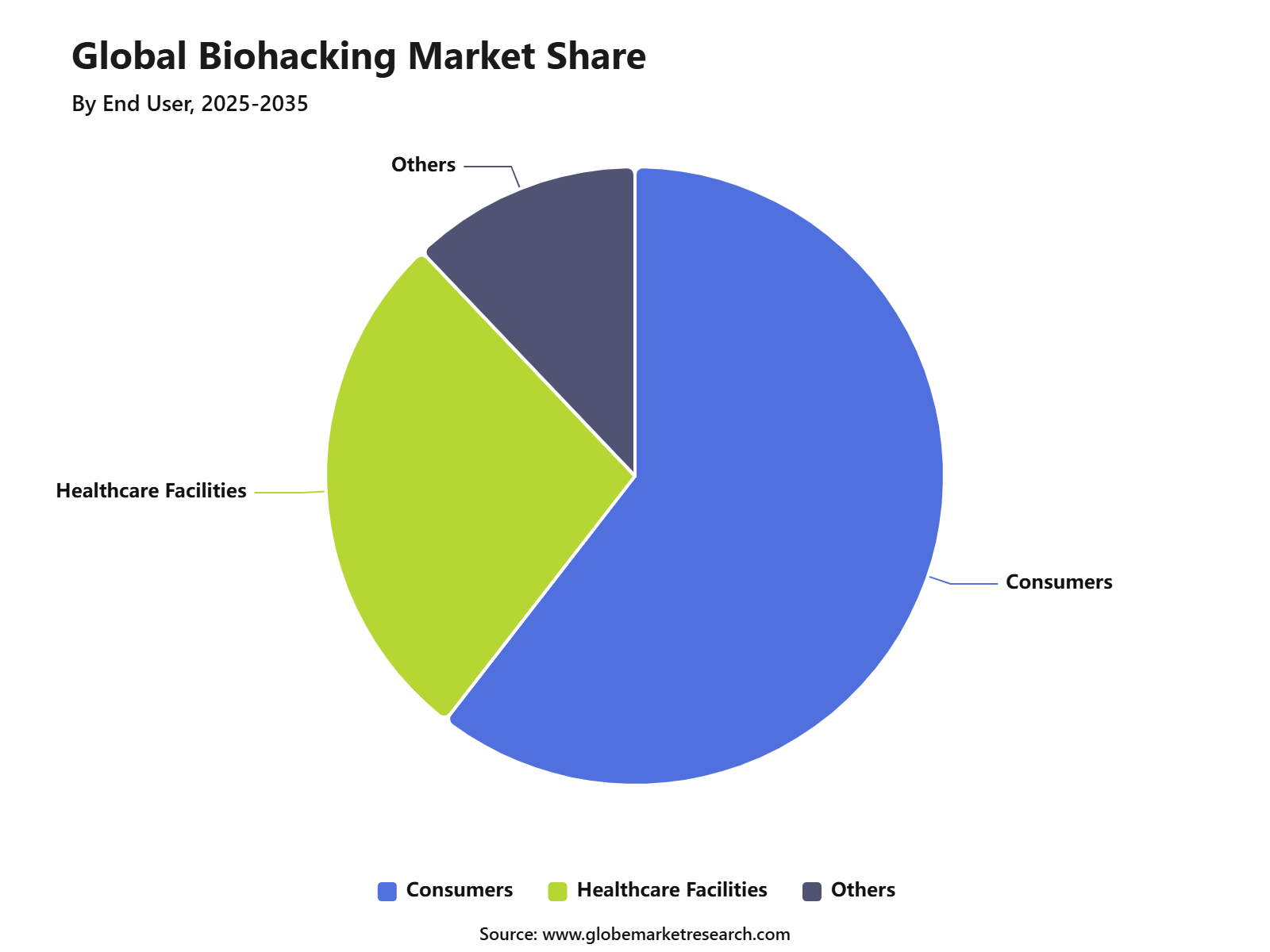 iThe graph shows projected market growth until 2035 based on CAGR analysis. Actual outcomes may vary depending on changing demand, competition, and economic factors.To gain greater insights - request a sample report PDF
By Geography
North America claimed the leading position in the Biohacking Market with a 43.5% share, supported by high adoption of wearable technology, strong consumer spending on wellness, advanced healthcare infrastructure, and wider acceptance of personalized health solutions. The region has a mature ecosystem for digital health, preventive care, genetic testing, fitness technology, and performance optimization products.
North America is also benefiting from strong digital health innovation and higher consumer readiness to pay for wellness solutions. The market is expected to see continued opportunities in wearable biosensors, AI-based health coaching, nutrigenomics, longevity clinics, personalized supplements, cognitive performance tools, and preventive wellness platforms.
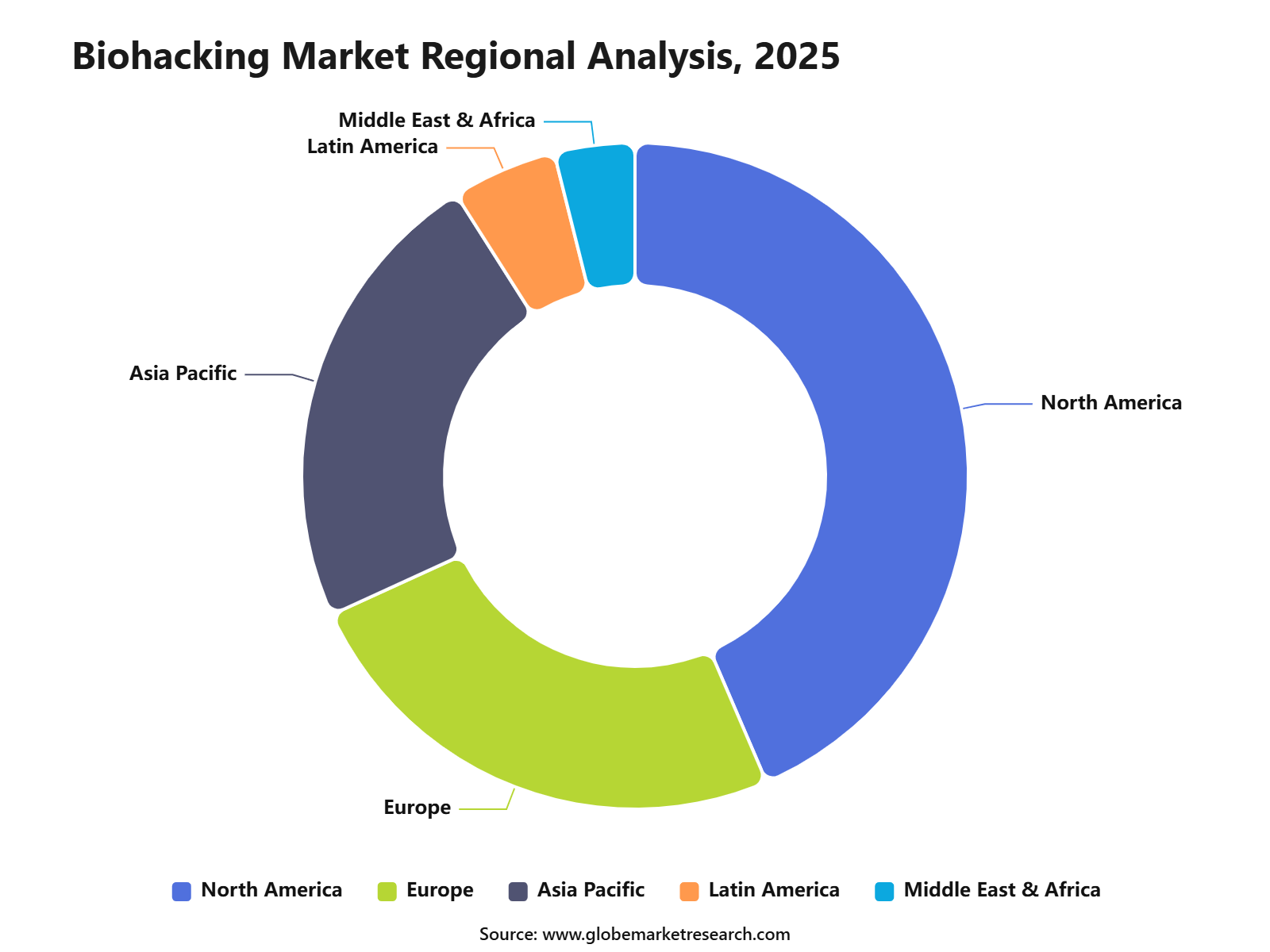 iThe graph shows projected market growth until 2035 based on CAGR analysis. Actual outcomes may vary depending on changing demand, competition, and economic factors.To gain greater insights - request a sample report PDF
Regional Impact Analysis
Impact Factor | Estimated CAGR Impact | Regional Relevance | Market Impact |
|---|---|---|---|
North America market leadership | +5.6% | U.S. and Canada | Leads consumer adoption. |
Europe preventive wellness growth | +4.2% | UK, Germany, France, Nordics | Supports regulated wellness use. |
Asia Pacific rapid expansion | +4.8% | China, India, Japan, South Korea | Driven by wellness awareness. |
Latin America emerging adoption | +2.7% | Brazil, Mexico, Chile, Colombia | Builds early demand. |
Middle East and Africa wellness growth | +2.3% | UAE, Saudi Arabia, South Africa | Shows future potential. |
The U.S. Biohacking Market was valued at USD 13.2 billion in 2025 and is projected to expand at a CAGR of 19.3%. Growth in the country is being supported by rising use of health tracking devices, increasing focus on chronic disease prevention, strong demand for fitness and sleep optimization, and growing interest in personalized nutrition.
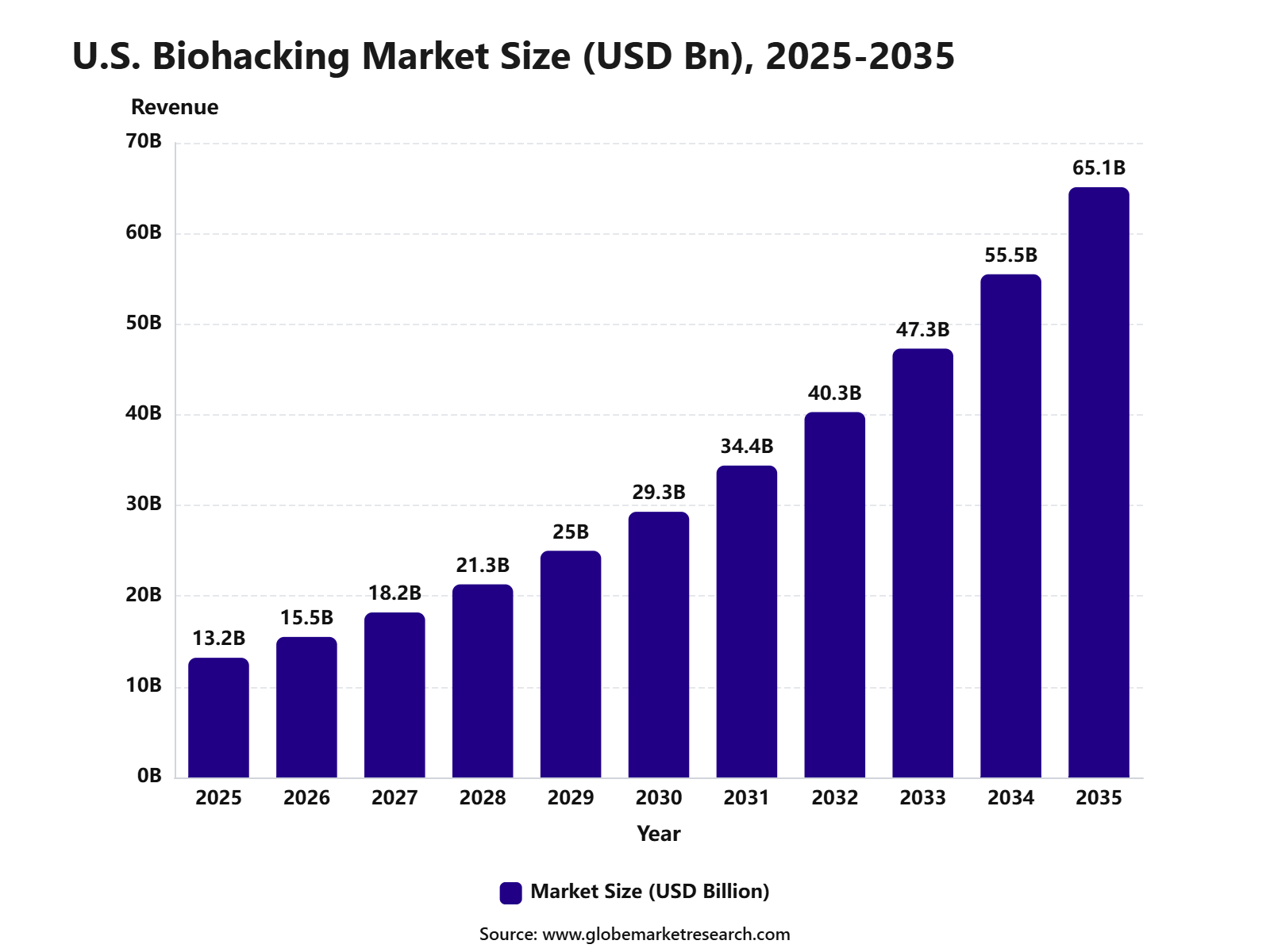 iThe graph shows projected market growth until 2035 based on CAGR analysis. Actual outcomes may vary depending on changing demand, competition, and economic factors.To gain greater insights - request a sample report PDF
Drivers Impact Analysis
Impact Factor | Estimated CAGR Impact | Regional Relevance | Market Impact |
|---|---|---|---|
Rising consumer focus on health optimization | +5.2% | North America, Europe, Asia Pacific | Drives biohacking adoption. |
Growth in wearable health devices | +4.8% | U.S., Europe, China, Japan | Expands real-time health tracking. |
Increasing interest in personalized wellness | +4.3% | North America, Europe, urban Asia | Supports customized health solutions. |
Rising adoption of nutrigenomics | +3.9% | U.S., UK, Germany, Japan, India | Improves diet-based health planning. |
Growth in preventive healthcare awareness | +3.6% | Global | Encourages early health monitoring. |
Restraints Impact Analysis
Impact Factor | Estimated CAGR Impact | Regional Relevance | Market Impact |
|---|---|---|---|
High cost of advanced biohacking tools | -2.7% | Emerging markets, price-sensitive users | Limits mass adoption. |
Lack of clinical validation for some products | -2.3% | Global | Affects consumer trust. |
Data privacy concerns | -2.0% | North America, Europe, developed Asia | Raises user security concerns. |
Regulatory uncertainty | -1.8% | U.S., Europe, Asia Pacific | Slows product approvals. |
Limited awareness in developing regions | -1.5% | Africa, Latin America, rural Asia | Restricts market penetration. |
Opportunities Impact Analysis
Impact Factor | Estimated CAGR Impact | Regional Relevance | Market Impact |
|---|---|---|---|
Expansion of personalized health platforms | +4.9% | North America, Europe, Asia Pacific | Supports tailored wellness. |
Growth in AI-based health analytics | +4.5% | U.S., China, India, Europe | Improves health insights. |
Rising demand for anti-aging solutions | +4.1% | U.S., Europe, Japan, South Korea | Drives premium adoption. |
Development of home-based testing kits | +3.7% | North America, Europe, Asia Pacific | Expands consumer access. |
Growth in corporate wellness programs | +3.3% | U.S., Europe, India, GCC | Supports workplace adoption. |
Challenges Impact Analysis
Impact Factor | Estimated CAGR Impact | Regional Relevance | Market Impact |
|---|---|---|---|
Safety concerns around invasive biohacking | -2.4% | Global | Limits advanced use cases. |
Misinformation and unverified claims | -2.1% | Global | Weakens consumer confidence. |
Integration issues with health data platforms | -1.7% | North America, Europe, Asia Pacific | Delays user adoption. |
Unequal access to premium wellness tools | -1.6% | Emerging markets | Creates affordability barriers. |
Ethical concerns over human enhancement | -1.5% | U.S., Europe, developed Asia | Raises public debate. |
Key Market Segments
By Product Type
Wearable Devices
Smart Implants
Gene-Editing Kits
Nootropics & Supplements
Sensors & Biomonitoring Patches
Others
By Biohacking Type
Nutrigenomics
DIY Biology
Grinder
Others
By End User
Consumers
Healthcare Facilities
Others
Key Regions and Countries
North America
US
Canada
Europe
Germany
France
The UK
Spain
Italy
Rest of Europe
Asia Pacific
China
Japan
South Korea
India
Australia
Rest of APAC
Latin America
Brazil
Mexico
Rest of Latin America
Middle East & Africa
South Africa
Saudi Arabia
UAE
Rest of MEA
Market Trend Analysis
Impact Factor | Estimated CAGR Impact | Regional Relevance | Market Impact |
|---|---|---|---|
Wearable-led biohacking growth | +5.0% | Global | Expands daily health tracking. |
Nutrigenomics adoption | +4.2% | U.S., Europe, Japan, India | Supports personalized nutrition. |
Sleep optimization technologies | +3.6% | North America, Europe, Asia Pacific | Improves wellness routines. |
Longevity and anti-aging solutions | +4.0% | U.S., Europe, Japan, South Korea | Drives premium spending. |
Biohacking communities and digital platforms | +3.2% | Global | Increases consumer engagement. |
Investment Opportunity Analysis
Impact Factor | Estimated CAGR Impact | Regional Relevance | Market Impact |
|---|---|---|---|
Wearable biohacking devices | +5.0% | North America, Europe, Asia Pacific | Offers strong product growth. |
Personalized wellness platforms | +4.6% | U.S., Europe, India, China | Supports scalable services. |
Genetic and microbiome testing | +4.0% | U.S., UK, Germany, Japan | Expands precision wellness. |
Longevity and anti-aging solutions | +3.8% | U.S., Europe, Japan, South Korea | Builds premium opportunity. |
AI-powered health coaching | +3.5% | Global | Improves user retention. |
Recent Developments
May 2026 - Oura filed confidentially for a U.S. IPO. The company was valued at nearly USD 11 billion after raising more than USD 900 million in Series E funding in October 2025. Oura expects to exceed 5 million paid members and aims to double revenue to over USD 1 billion.
November 2025 - Function Health raised USD 298 million in Series B funding. The round valued the company at USD 2.5 billion and supported its Medical Intelligence Lab for preventive health data analysis.
Report Scope
Report Highlights | Details |
|---|---|
Market Revenue (2025) | USD 39.6 Bn |
Forecast Revenue (2035) | USD 231.3 Bn |
CAGR (2025-2035) | 19.3% |
Base Year for Estimation | 2025 |
Historic Data | 2020-2024 |
Forecast Period | 2025-2035 |
Report Coverage | AI market impact analysis, Market surveys, trade analysis, Industry & competitive intelligence, Revenue projections, company positioning, competitive analysis, growth drivers, and emerging market trends, Strategic Consultation & Advisory Services |
Segments Covered | By Product Type (Wearable Devices, Smart Implants, Gene-Editing Kits, Nootropics & Supplements, Sensors & Biomonitoring Patches, Others), By Biohacking Type (Nutrigenomics, DIY Biology, Grinder, and Others), By End User (Consumers, Healthcare Facilities, and Others), By Regional Insights |
Regional Analysis | North America - US, Canada; Europe - Germany, France, The UK, Spain, Italy, Russia, Netherlands, Rest of Europe; Asia Pacific - China, Japan, South Korea, India, New Zealand, Singapore, Thailand, Vietnam, Rest of Latin America; Latin America - Brazil, Mexico, Rest of Latin America; Middle East & Africa - South Africa, Saudi Arabia, UAE, Rest of MEA |
Key companies profiled | Apple Inc., TrackMyStack, Thync Global Inc., Thriveport, LLC, The ODIN, Muse, Moodmetric, HVMN Inc., Fitbit, Inc., CardieX, Apple Inc. and Thync Global Inc |
Customization Scope | Tailored insights for specific regions, countries, and market segments can be provided. Additional report customization is available upon request. |
Competitive Landscape
The market is characterized by intense competition among established players and emerging companies. Strategic partnerships, mergers and acquisitions, and product innovation are key strategies employed by market participants.
Key Market Players
Apple Inc.
The ODIN
Thync Global Inc.
Fitbit, Inc.
Muse (Interaxon Inc.)
Thriveport, LLC
TrackMyStack
TrackMyStack
Mood metric
Other Key Players
Meet the Team
This report was prepared by our expert analysts with deep industry knowledge and research experience.
Manoj H. brings more than 7 years of professional experience in market research, business intelligence, and industry-focused analysis. His research background covers detailed market assessment, competitive benchmarking, consumer and industry trend tracking, and strategic opportunity evaluation across multiple global sectors. Over the years, Manoj has worked on a wide range of research assignments involving market estimation, company analysis, value chain assessment, regional outlook, and growth opportunity mapping. His expertise lies in converting complex business data into clear, useful, and decision-ready insights for companies, investors, consultants, and industry stakeholders.
Sayali brings more than 5 years of experience to Globe Market Research, supporting the accuracy, clarity, and relevance of research content across multiple industries. She reviews market data, segment analysis, competitive insights, and industry trends to ensure each report meets strong quality standards and provides practical value to business decision-makers. Her expertise spans healthcare, information technology, consumer goods, and diverse cross-industry domains. With a strong focus on data reliability, structured analysis, and clear presentation, Sayali helps ensure that each research output delivers well-reviewed insights for clients, investors, consultants, and industry stakeholders.
Frequently Asked Questions
Related Reports
More in Healthcare and Pharmaceuticals
Transcatheter Embolization And Occlusion Devices Market to hit 14.5 bn by 2035
Global Transcatheter Embolization And Occlusion Devices Market By Product Type (Embolization Coils, Flow Diversion Devices, Others), By Material (Platinum, Nitinol, Others), By Application (Peripheral Vascular Disease, Oncology, Others), By Indication (Aneurysms, Arteriovenous Malformations, Others), By End User (Hospitals, Ambulatory Surgical Centers, Others), By Region (North America, Europe, Others), By Regional Insights, Business plan and and project report, Investment Opportunities, Profitability, Industry Trends, Leading Companies and Growth Forecasts by 2025-2035.
US Medical Devices Market to hit USD 407.6 billion by 2035
US Medical Devices Market Size, Go-to-Market Strategy Analysis By Device Type (In Vitro Diagnostics (IVD), Diagnostic Imaging, Cardiovascular Devices, Orthopedic Devices, Surgical Devices, Patient Monitoring Devices, Others), By Application (Cardiology, Diagnostic Imaging, Orthopedics, Neurology, In Vitro Diagnostics, Others), By End User (Hospitals and Clinics, Ambulatory Surgical Centers, Diagnostic Laboratories, Home Healthcare, Others), By Technology (Conventional Devices, Connected Medical Devices, AI-Enabled Medical Devices, Robotic-Assisted Devices), By Regional Insights, Business plan and Project Report, Investment Opportunities, Profitability, Industry Trends, Leading Companies and Growth Forecasts By 2025-2035
Skin Care Products Market to Cross USD 285.8 Bn by 2035
Global Skin Care Products Market By Type (Facial Care, Body Care, Lip Care), By Packaging (Tubes, Bottles, Jars, Others), By Products (Face Creams & Moisturizers, Cleansers & Face Wash, Sunscreen, Body Creams & Moisturizers, and Others), By Distribution Channel (Supermarkets & Hypermarkets, Convenience Stores, and Others), By End-User (Female, Male, Unisex), By Category (Premium Skincare Products, Mass Skincare Products), By Ingredient (Chemical, Natural), By Regional Insights, Business plan and Project Report, Investment Opportunities, Profitability, Industry Trends, Leading Companies and Growth Forecasts by 2025-2035
Telemedicine Market to Exceed USD 981.6 Billion by 2035
Global Telemedicine Market Size, Share Analysis Report By Modality (Synchronous, Asynchronous, Remote Patient Monitoring), By Component (Software Platforms, Hardware & Peripherals, Services), By End User (Healthcare Providers, Payers & Employers, Patients / Home Users, Government Agencies & NGOs), By Regional Insights, Business plan and Project Report, Investment Opportunities, Profitability, Industry Trends, Leading Companies and Growth Forecasts by 2025-2035